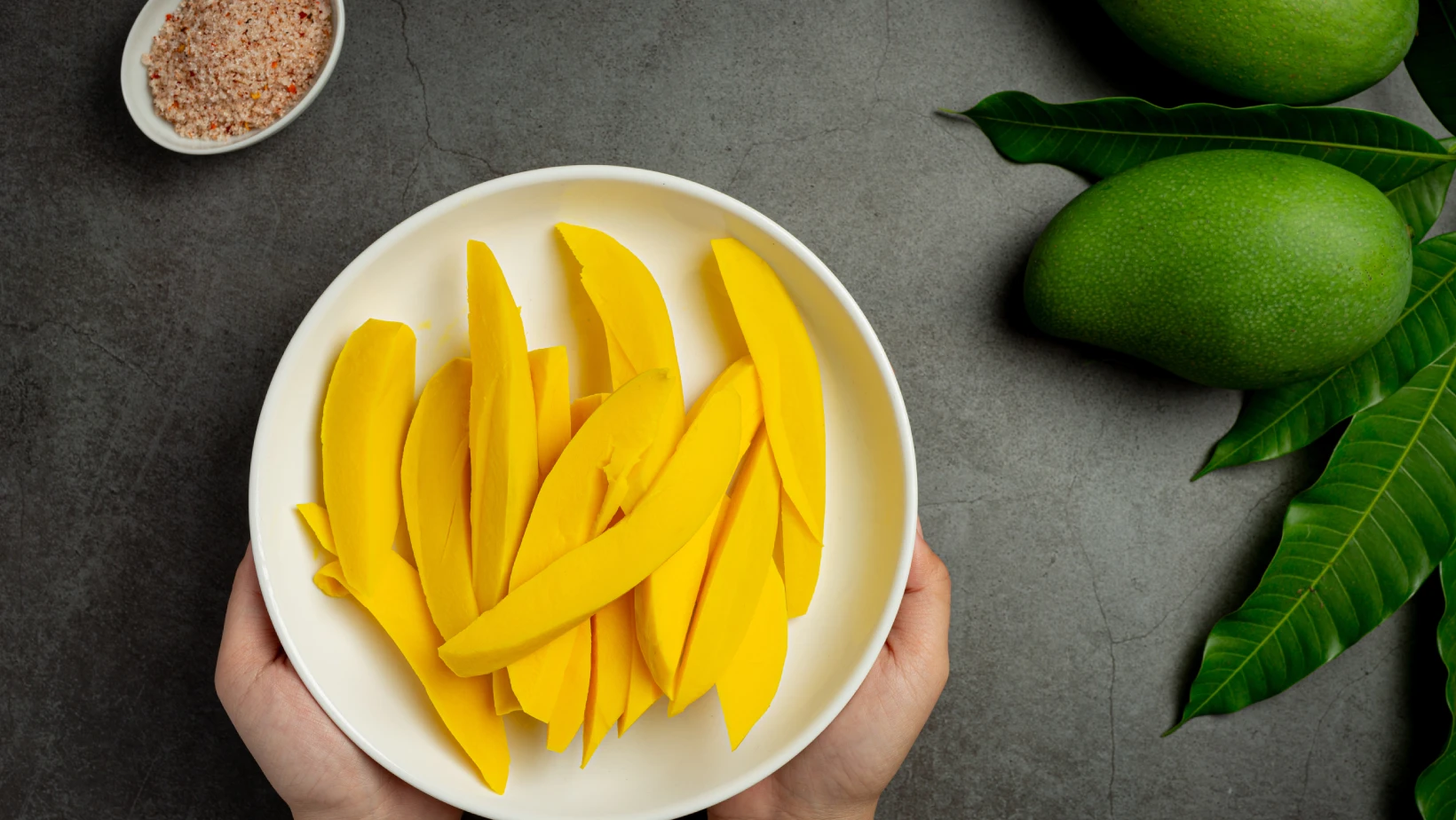
Mangoes are one of the most loved fruits of the summer season.
In Ayurveda, however, the focus is not just on eating mangoes, but on how they are prepared and consumed to maintain balance and support digestion.
Traditional recipes were designed to make mango easier to digest, less heating, and more nourishing. These preparations combine taste with function, ensuring that mango’s benefits are fully absorbed without disturbing the body.
Ayurvedic Understanding of Mango
According to Ayurveda, ripe mango is considered:
- Madhura rasa (sweet in taste)
- Guru (heavy and nourishing)
- Bruhana dravya (body-building and strengthening)
- Tarpana dravya (deeply satisfying and nourishing)
Due to its madhura rasa, mango provides a sense of satisfaction and fullness (trupti). It nourishes the body, supports strength (bala), and helps improve overall vitality when consumed appropriately.
Because of its nourishing and tissue-building nature, mango can also be beneficial for individuals looking to gain healthy weight or improve body strength.
At the same time, mango has an ushna virya (heating potency) and can increase Pitta dosha if consumed in excess or without considering digestion. This is why traditional preparations focused on balancing its qualities with digestive and cooling ingredients.
1. Aamras with Ghee or Milk
Why it works (Ayurveda)
Balances mango’s heat, supports digestion, and enhances nourishment.
Ingredients
- 2 ripe mangoes (Alphonso or similar)
- 1–2 tsp ghee
- Optional: ½ cup fresh milk (room temperature)
Method
- Wash, peel, and extract mango pulp.
- Blend or mash into a smooth consistency.
- Add ghee and mix well.
- If using milk, add fresh milk and stir gently.
- Serve immediately.
Tip
Always consume fresh. Avoid storing or refrigerating for long.
2. Aamras with Shevai (Vermicelli)
Why it works
Makes the dish lighter, reduces excessive sweetness, and improves satiety.
Ingredients
- 2 ripe mangoes (pulp extracted)
- 1 cup roasted shevai (vermicelli)
- 1–2 tsp ghee
- Water as needed
Method
- Cook shevai in water until soft.
- Drain excess water and let it cool slightly.
- Add ghee to the shevai.
- Mix with fresh aamras.
- Serve warm or at room temperature.
Tip
Avoid making it too heavy—keep proportions balanced.
3. Kairi Panha (Raw Mango Drink)
Why it works
Cooling and hydrating, helps manage heat and fatigue.
Ingredients
- 2 raw mangoes (kairi)
- 3–4 tsp jaggery (adjust to taste)
- Roasted cumin powder
- A pinch of rock salt
- Water
Method
- Boil or pressure cook raw mangoes until soft.
- Peel and extract pulp.
- Add jaggery, cumin powder, and salt.
- Mix well and dilute with water.
- Serve at room temperature or slightly cool.
Tip
Avoid ice; keep it naturally cooling.
4. Daal Kairi (Raw Mango Dal)
Why it works
Balances sourness with protein and supports digestion.
Ingredients
- ½ cup toor dal
- 1 small raw mango (peeled and chopped)
- Turmeric
- Cumin seeds
- Ghee
- Salt
Method
- Cook dal with turmeric until soft.
- Add chopped raw mango and cook briefly.
- Prepare tempering with ghee and cumin seeds.
- Mix into dal and simmer.
- Serve warm.
Tip
Keep it light; avoid excessive spices.
5. Kairi Kadhi
Why it works
Combines sourness with buttermilk (takra), improving digestion.
Ingredients
- 1 cup buttermilk
- ½ raw mango (grated or chopped)
- Besan (optional, small amount)
- Turmeric
- Cumin seeds
- Ghee
Method
- Mix buttermilk with turmeric and a little besan.
- Add raw mango pieces.
- Simmer on low heat.
- Prepare ghee tempering with cumin and add.
- Serve warm.
Tip
Do not overheat buttermilk; keep the flame low.
6. Kairi Chutney / Takku
Why it works
Stimulates Agni, enhances taste in small quantities.
Ingredients
- 1 raw mango
- Fresh coriander or coconut
- Cumin seeds
- Rock salt
Method
- Chop raw mango.
- Grind with other ingredients into a coarse paste.
- Adjust salt and consistency.
- Serve in small portions with meals.
Tip
Best consumed fresh.
7. Aam Papad (Sun-Dried Mango)
Why it works
Seasonal preservation, natural snack, and a better alternative to processed sweets.
Ingredients
- Mango pulp
- Jaggery (optional)
Method
- Extract and smoothen mango pulp.
- Add jaggery if needed.
- Spread a thin layer on a plate or tray.
- Sun-dry for 2–3 days until firm.
- Cut into strips and store.
Tip
Store in a dry place and consume in moderation.
Traditional Wisdom Behind These Recipes
These recipes follow key Ayurvedic principles:
- Mango is combined with digestive or cooling ingredients
- Preparations are kept fresh and seasonal
- Portions are moderate and balanced
- Focus remains on supporting digestion (Agni)
Traditional food practices understood that even nourishing foods should be consumed thoughtfully to maintain balance.
Conclusion
Mangoes are not just meant to be eaten, they are meant to be prepared thoughtfully.
Traditional recipes ensure that mango’s nourishing qualities are enjoyed without causing imbalance. By following these methods, it is possible to enjoy mangoes in a way that supports digestion, energy, strength, and overall well-being.
Discover the right way to nourish your body with Ojas Ayurved.
Quick Links